- Details
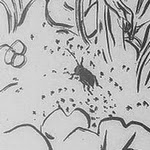 In 1896, Jules Renard published Histoires naturelles (Nature stories), a book of stories whose main characters were animals: hens, turkeys, ducks, cocks, peacocks, pigeons, swans, dogs, cats, cows ... a long list. The book (and the animals’ list) was expanded in later editions until 1909; Renard died the following year. The first story is called Le chasseur d'images (Hunting for Pictures) and explains how someone leaves his house in the morning ready to observe everything he comes across along the day: “les yeux servent de filets où les images s'emprisonnent d'elles-mêmes” (the eyes act as nets where images are trapped). When he returns home, before bedtime, he examines those images. Then, we begin to read descriptions of the images, each one a story; most are short and others, hardly a line.
- Details
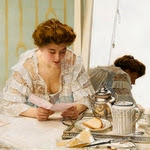
We get some posts about Schubert every year; he's the apple of my eye. Today, as we did last year and the year before, we are dedicating this post to him, as an homage in his death anniversary, 19th November 1828 (this year, the date happens to meet my posting day). I kept a subject for today, Schubert's “year of miracles”, 1815, during which he wrote 145 songs.
Elisa Rapado gave me the idea some months ago when she blogged about the Annus Mirabilis; she invited singers, pianists and people keen of Schubert to celebrate the 200th anniversary of that year.
- Details
 A couple of weeks ago a reader commented about a lied that it was one of his favorite pieces of music and every time he listened to a new version, he discovered new nuances. A few days ago, I watched the documentary Conducting Mahler (highly recommended to Mahlerians) where Claudio Abbado said referring to a symphony: "if you love this piece, you’ll find and learn new things every time you listen to it." Abbado used the key word: love. We fall in love with a piece of work and, in sort of return to our love, it teaches us something new each time we listen to it. Of course, that won't happen all the time; sometimes, we like some pieces very much and we take great pleasure in listening to them (which is no mean feat!) but still, they contribute nothing new. Could this be a definition of a masterpiece? A work that, whenever is approached, feels like new, allows as many [...]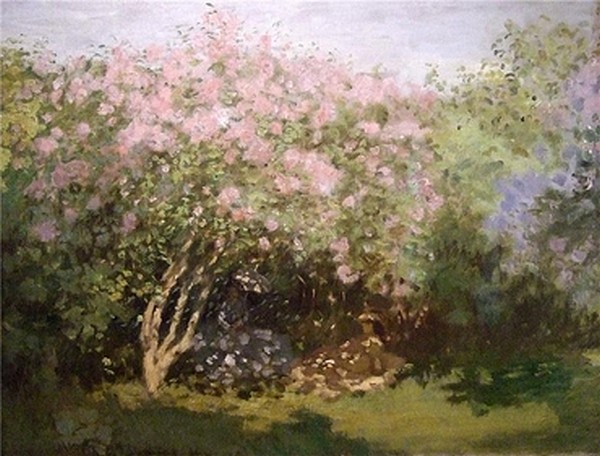
- Details
If we made a list of the ten most passionate songs (already noted in my blog’s notebook), Meine Liebe ist grün by Johannes Brahms would possibly be included. Short and vehement, romantic in every sense of the word. A drunk in love song, as the last line of the poem says, but most of all, a song surrounded by love. Do you know its story?
Robert Schumann was institutionalized in Endenich in February 1854 and he remained there until his death in July 1856. In June 1854, his eighth son was born and Johannes Brahms was his godfather; the child was named Felix in memory of Schumann's beloved friend, Felix Mendelssohn. At that moment, Brahms was only 21 years old; he had met the Schumanns the previous year and soon, they became good friends. Their relationship [...]
- Details
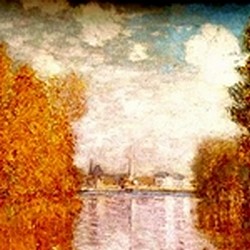
In the spring of 1948, Richard Strauss and his wife Pauline lived in retirement in Switzerland. The composer was about to turn 84 years old, not much time had passed since the end of (in Strauss's words) "the most terrible period of human history," and he was still under suspicion of having been a collaborator. Months before, he had returned from a trip to England during which he had managed to rehabilitate his image with the help of friends like Thomas Beechan, and in June that year, he was exonerated in his denazification trial as innocent; in early 1949, he went back to his home in Garmisch-Partenkirchen, where he died on September 6th. It was during the months between the spring and autumn of 1948 when he wrote his last works, five lieder, although the last one, Malven, was kept secret by the soprano Maria Jeritza to whom it was dedicated, and anything was known [...]
Series